In this content collaboration for Howden, Colin Mico (Head of Recreational Clubs) discusses why underinsurance is such a problem for cricket clubs – and how to stay protected.
Underinsurance is a common – and costly – issue across the commercial insurance market, and cricket clubs are no exception. Recent surveys consistently show that most commercial buildings are not insured for their true rebuilding cost.
Analysis carried out by our partners BCH Ltd, found that 59% of businesses they assessed last year were underinsured, and those underinsured needed an average uplift of 58% just to reach adequate cover.
This picture is reinforced by independent valuation specialists REASSESS, whose analysis indicates that only around 7% of commercial properties are currently insured at the correct level, with approximately 70% underinsured and 23% overinsured.
For cricket clubs, the implications can be significant – from unexpected repair costs to cancelled fixtures and reputational impact. In many cases, the full extent only becomes clear when a claim is made.
Why cricket clubs are especially exposed
Most cricket clubs are run by committed, part-time volunteers rather than professional facilities managers. Club officers often rely heavily on their professional advisers to keep them informed and compliant.
It is common for property insurance documentation to reference the requirement for a fair presentation under the Insurance Act 2015. However, this rarely extends to practical guidance on how a club should determine accurate reinstatement costs for its buildings and assets.
This approach has been tested in recent years.
Between 2019 and 2022, construction industry inflation ran at around 40%, driven by Covid, Brexit, labour shortages and rising material costs. Over the same period, many buildings continued to be index-linked at around 5%, reflecting general economic inflation rather than construction-specific cost increases.
One of the results is a widening gap between sums insured and true rebuilding costs.
When we work with a new cricket club, it is not unusual to find buildings underinsured by 30–40%. We use data from Sport England, loss adjusters and professional surveyors to assess the adequacy of sums insured.

Getting to the right figures: professional valuations matter
To arrive at accurate and defensible sums insured, we recommend that clubs engage a professional surveyor.
Typically, this will involve either a desktop valuation survey, or a site visit valuation.
Both approaches provide an independent assessment of reinstatement costs and give clubs a robust basis for demonstrating a fair presentation under the Insurance Act 2015 if a claim is scrutinised.
Why informal estimates often fall short
Some clubs rely on the judgement of members with building experience to sense-check their sums insured. While well-intentioned, these estimates frequently underestimate the true cost of reinstatement.
Key elements are often overlooked, including:
- Demolition and removal of debris
- External works and underground services
- Professional fees, including architects, surveyors and planning costs
- Compliance with current building regulations
- VAT
These costs can be substantial. And they are all taken into account by a loss adjuster when a claim is assessed.
What underinsurance really means when you make a claim
Underinsurance does not only affect major losses. It can reduce any claim.
When a claim occurs, the loss adjuster will assess the adequacy of the sums insured. If the reinstatement cost of buildings, contents, machinery or equipment exceeds the sums insured, insurers may apply average. In simple terms, the claim payment is reduced in proportion to the level of underinsurance.
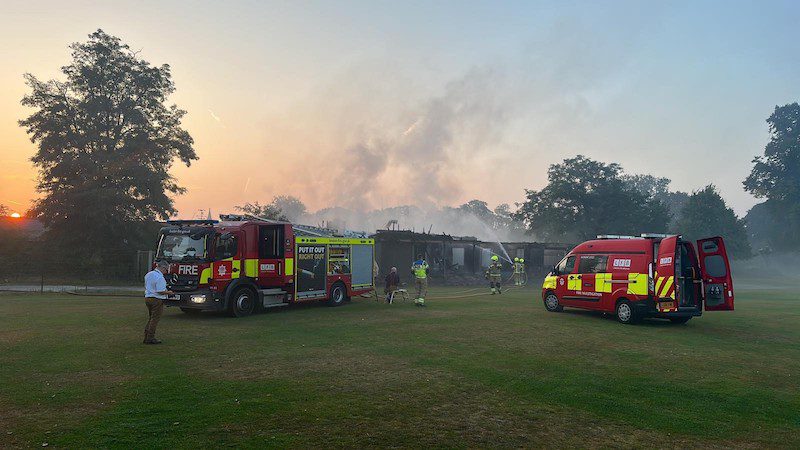
For example, if a fire causes £20,000 of damage to a pavilion and the club is found to be 50% underinsured, the insurer may only pay £10,000. The remaining £10,000 would need to be funded by the club.
The larger the claim, the larger the potential funding gap. In practice, this often means drawing on club reserves, fundraising, or contributions from committee members and players.
In rare and extreme cases, where insurers believe that sums insured have been deliberately understated, they may have the right to void the policy, refuse all claims and retain the premium. While uncommon, this underlines the importance of accuracy and transparency.
Fair presentation starts with good advice
Even club officials with relevant industry experience may not be fully up to date with current construction costs for a cricket pavilion or clubhouse.
Insurers are unlikely to comment on whether sums insured are adequate. A specialist broker, however, should be able to identify potential concerns, challenge figures where appropriate, and direct clubs towards professional valuation support.
Accurate sums insured are not simply best practice; sthey are a core part of making a fair presentation under the Insurance Act 2015.
It’s not just about buildings
Buildings are often the largest exposure, but they are not the only one.
Clubs should also regularly review:
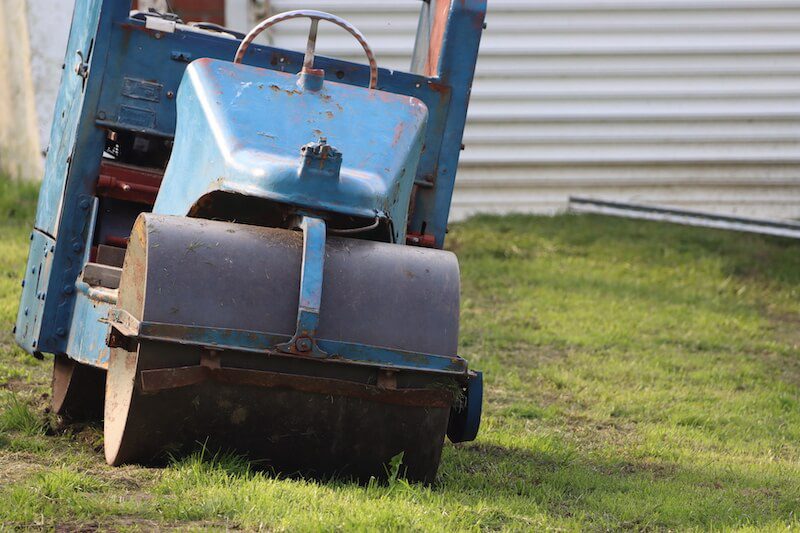
- Contents, machinery and equipment, including items kept outside
- Replacement costs, rather than second-hand values (online marketplaces can provide a useful guide)
- Business interruption cover, particularly loss of income following a major claim
Cricket clubs don’t always operate to make a profit – but they do rely on steady income to keep running. For that reason, business interruption is often best arranged on a gross revenue basis rather than gross profit.
This means covering the club’s total income, including subscriptions, bar takings, events and sponsorship, rather than profit alone.
The indemnity period is equally important. If rebuilding or repairs could take longer than 12 months, cover should reflect that reality, with 24 months often being more appropriate.

Peace of mind when it matters most
Insurance is there to protect your club when something goes wrong – not to create further financial strain or uncertainty.
At Howden, we’re specialists in helping cricket clubs get the right sums insured. Our objective is simple: confidence that, in the event of a claim, underinsurance does not undermine the protection they rely on.
If you’d like to sense-check your current cover or talk through next steps, we’re always happy to help.
Colin Mico – [email protected]
***
Your cricket club can also explore Howden’s insurance offer for cricket clubs, get a quote or find out other essential cover they can provide.
🏏 Thanks to Colin and the team at Howden for this look at underinsurance with analysis of why it’s so important to get the sums insured right – and enough cover for your club’s circumstances.
This is Partner Content for Howden – if the mood takes you, click to read Cricket Yorkshire’s policy on partner content.

- Bear Cricket: Bats & Equipment [2026 Review] - April 1, 2026
- Scarborough Cricket Club: Turning the tide at North Marine Road - March 19, 2026
- How Muff Field Cricket Club prioritises sustainability - March 16, 2026

Leave a Reply