In this deep-dive into how clubs can become more sustainable, the case study is Muff Field Cricket Club in South Bradford. Their considerable efforts are eye-catching.
The club has two Saturday teams in the Dales Council Cricket League and a women’s squad who have finished their first indoor season.
Importantly, for this environmental context, Muff Field Cricket Club is in the Bradford Clean Air Zone (CAZ) and in one of the most deprived communities in the district, ranked No. 2 for deprivation on national indices.

So, yes, sustainability means clear, environmental wins but it’s as much about futureproofing Muff Field Cricket Club. These projects keep it affordable and accessible for a community where there are major social and economic barriers.
This is a group of volunteers who have put time into grants applications and given thought to a wide range of ways both club and environment can benefit.
To clarify, environmental sustainability is the use of resources that don’t run out or cause harm, as defined by Greenpeace. With the help of Muff Field’s Treasurer Matt Wilkinson (instrumental in this article), we’ll see that reducing energy, water and fuel costs can be achieved.
Matt told me: “It’s important to mention that sustainability, in my eyes, isn’t just about green – it’s also about the future of clubs. With ever-increasing energy and water costs, anything a club can do to trim the fat, as it were, will undoubtedly help ensure their long-term survival.”
He acknowledges that without funding support, many of the projects we’re about to discuss wouldn’t be possible. So, there’s definitely a financial reality there that clubs may have to pace themselves – but Rome wasn’t built in a day.
Matt reckoned: “Funding alone isn’t always enough. Clubs have to be smart in how they approach projects. Putting in your own time can significantly reduce costs which is especially important when considering grant application limits, and often it’s about looking at what you already have on site that can be reused or repurposed.”

He cites the use of toilet cistern bags (above) they installed to save water. It’s very little cost compared to the savings they will generate in time – but half a brick could achieve a similar result. As he put it, sometimes sustainability is about thinking a little differently and making small, practical changes.
The aim with this article is to spark clubs into pondering what they could start with or try next – so let’s dive in…
Solar PV – Initial Installation (Phase 1) Installed Oct 2023
Status: Completed
Cost: £10,500
Funding: £10,000 – ECB County Grants Fund, £500 – Club contribution
Savings to date: £2,000 approx
CO₂ saving – Approx 1 ton per year
Installed System
- 12 × 415 W Tiger Neo N-type panels (~5 kWp)
- GivEnergy 5 kW inverter
- 5.12 kWh GivEnergy battery
Solar installation has allowed Muff Field to produce enough clean, renewable energy (over 4 MWh per year) to power the pavilion during daylight hours. Their battery also captures enough power through the day for their pavilion to run on stored solar energy into evenings for training nights, community sessions, warm spaces and private events.
Solar power means lower running costs, a better environmental footprint and surplus is returned to the grid for a small but consistent income.
That first phase came with limitations that led to expanded battery storage and solar by early 2026.
Chiefly, the capacity from the 5.12 kWh battery was quite small for a multi-use sports facility. As a result, there wasn’t enough energy to be used consistently in evenings or high-demand days. Equally, winter or overcast days meant relying on the grid during peak times.

2. Expansion of Battery Storage & Solar array – Phase 2 – Install date 18th December 2025, into Jan 2026
Status: Approved; forming part of National Lottery delivery
Cost: £15,000
Funding: £15,000 – National Lottery Awards for All
Estimated CO₂ savings – 1.5ton per year (inc phase 1)
What’s been installed:
- 2 × 9.5 kWh GivEnergy batteries
- 1 × 5.12 kWh GivEnergy batteries
- 6 × 460 W Aiko Neostar panels (~2.76 kWp)
- Gen 3 5Kwh Inverter
Energetic game-changer
Increased battery storage to around 29.24 kWh has been the game-changer.
This boost in solar capability translates as being comfortably enough energy to run all that the pavilion requires with stored solar power and no reliance on expensive peak-rate electricity.
Muff Field partnered with Eco Partners, the specialist renewable energy company responsible for delivering Phase 1 and Phase 2 of the solar panel and battery installations.
Matt said: “Eco Partners have provided exceptional technical support, system design, and installation expertise, ensuring that the club achieved maximum value and long-term reliability from both projects.”

Rainwater harvesting
There are a host of other projects that Muff Field completed or have lined up. Rainwater harvesting is one that might feel more attainable for any club given a) the abundant British weather and b) the associated cost to action this.
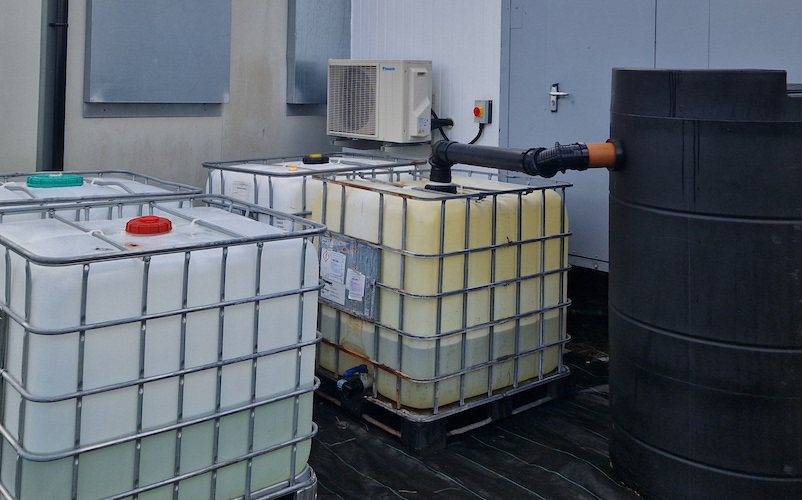
The cost was £3,000 and all of it was funded by National Lottery Awards for All. The upgrade meant the installation of a new 1,800-litre rainwater tank that’s fully integrated into the pavilion’s plumbing system.
The rain harvesting tank now feeds the toilets and handwashing sinks, reducing day-to-day water usage and lowering utility costs across the year.
Phase 2 is increasing storage capacity by a further 4,000 litres in order to water the square across the summer. This cuts down reliance on mains supply when consumption is highest and drought risks escalate (as we saw in Yorkshire in 2025).
Add in an electric ride-on mower (see photo below) already in use at their Sunny Bank Road HQ (Cost: £8,000, Fully funded by the West Yorkshire Mayor’s Sustainability Fund) and you get the picture that this is one proactive community, powered by the sun and their own work ethic.

Future goals
Short of a fully recycled Matt Wilkinson, you could imagine Muff Field Cricket Club might settle on that litany of improvements to bank balance and planet.
An air-to-heat pump system was on their radar to replace ageing and inefficient LPG gas burners that warm the pavilion. (That has since been installed too). They even have their eye on a wind turbine for good measure.
I know what clubs might be thinking. All power to your elbow (in need of a tubigrip from all of those grant applications) but we aren’t in a city where there is a funding focus of this kind. Nor do we qualify for all of those grants.
It’s a valid point but there’s always something clubs can do to save money and be more sustainable. Approaches such as retaining winter rainfall to use in summer on pitches or exploring how to become more energy efficient and keep bills down. (That needn’t involve solar panels).
In the case of Muff Field, they will save around 2 tonnes of CO₂ a year which is a notable achievement for a club with a small footprint. That’s the equivalent of petrol emissions of 8,000 car miles or the annual carbon absorption of around 90 mature trees.
As ever with stats, it’s not about the numbers but the real-world impact, both planetary and monetary.
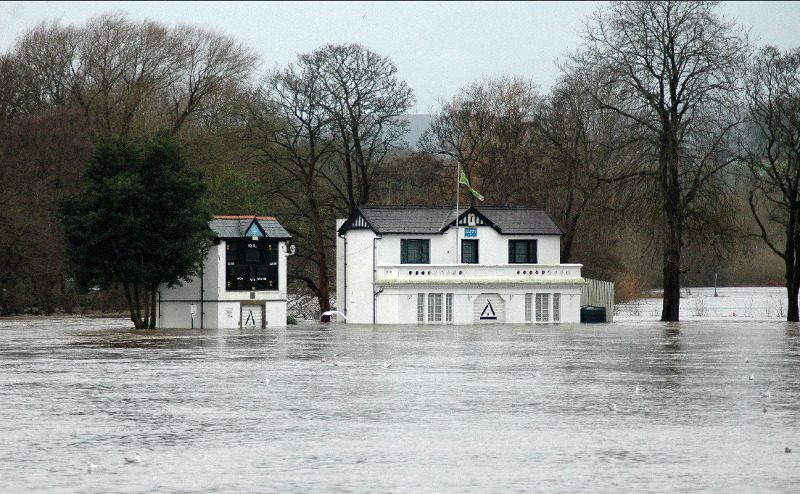
The recreational game has its role to play without solving the world’s problems. We have certainly seen the impact. In club cricket, the weather extremes has affected us all. Persistent flooding sit alongside droughts and the warmest year since 1844.
Whatever reasons are behind why cricket clubs opt for sustainability and however they choose to implement them is a moot point. It will be down to volunteer time, success with grants, financial security along with geographical and site-specific factors.
What Muff Field have put in place shows the art of the possible and they are not stopping there.
Matt said: “We want to continue reducing dependence on fossil fuels, lower annual operating costs and position Muff Field as one of the most environmentally advanced community cricket clubs in Yorkshire.”
Inspired for your own club?
The ECB’s Sustainability Resources are a good place to start with guides to reduce energy consumption, prevent flooding and more.
Sport England’s Buddle website (formerly Club Matters) has advice on environmental sustainability for clubs and community groups.

- How Muff Field Cricket Club prioritises sustainability - March 16, 2026
- Pre-season news: Around the Leagues - March 12, 2026
- Accessible seating:How cricket clubs can make a difference - March 5, 2026

Excellent article. Well done Muff Field Cricket Club 🏏.