
Table of Contents
Now that the clocks have gone back, the cricket season might feel a world away but there is always something going on.
In this article, I’ll explore some of the changes we know as cricket clubs swap leagues for 2027.
Why do clubs move leagues?
Clubs move for all kinds of reasons: a change of scene is common, as is the ambition to become part of an ECB Premier League in Yorkshire.
Standards of cricket and better grounds to play on remain factors as do the glowing embers from an occasional falling out with the current league.
Others make the switch to pastures new as they recognise either their own or their league’s future is drifting / perilous.
What do clubs need to do to join a league?
As I’ve discussed before, it can be an awkward uncoupling. You have to leave one before joining another and usually involves being voted in by member clubs.
There are no guarantees until it’s rubber-stamped so typically, the new league will inspect a prospective club’s ground and facilities, chat to committee members to get a sense of things and address any concerns they have.
It’s not unusual for cricket clubs to put together a presentation and try and persuade their new potential opponents that they deserve a place in the fixture list.
Who are the cricket clubs moving leagues for 2027?
Here’s a snapshot to give you an idea of some of the moves - it’s not at all exhaustive. Other leagues are sorting their divisions, having conversations and aiming to wrap that part of the admin.
The Yorkshire Premier League North (YPLN) welcomes Bardsey & Follifoot from the Aire-Wharfe League, as well as Old Sharlston, St Chad's Broomfield, Glasshoughton & Eggborough Power Station via the Pontefract & District Cricket League.
As part of the merry-go-round, the Aire-Wharfe League sees Hepworth & Idle join them from the Craven League, assuming all formalities are tied with a bow.
There’s usually an electronic vote in these league votes, a little like Eurovision but without the glitter and spandex - though the politics are probably comparable.
I know of two clubs - Haworth & Muff Field - who have applied for - and now been accepted into - the Halifax Cricket League with the result announced in late-October.
In most cases, a club is accepted by a league, it’s a process that doesn’t lend itself to messing everyone around but clubs, at least publicly, do well to stay cordial with all parties - in case it goes sideways.
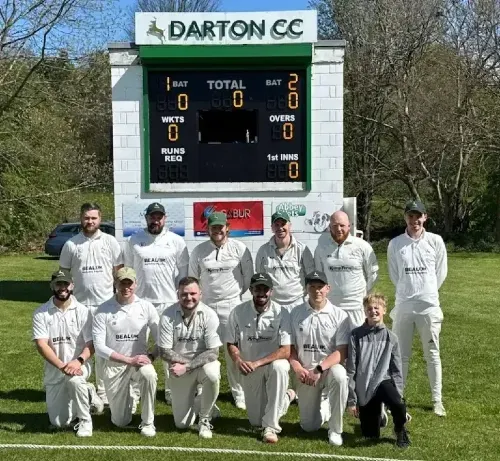
Further South, the Yorkshire Southern Cricket Premier League (YCSPL) have four new additions from the Pontefract League - Calder Grove, Darton, Askern Welfare and Stainborough, as well as Waleswood Sports from the Bassetlaw League.
Editor's Note: The 'moving leagues' section above has been updated on 28 October to reflect new info provided (with thanks). Some leagues are still working out what their tables look like for 2027 too.
How does clubs moving affect leagues?
To state the obvious, a league doesn’t want to lose its member clubs. While there is always a degree of churn across Yorkshire club cricket, it’s ultimately a negative signal.
Of course, privately, leagues may not be too distressed at a particular exit, if relations have been fraught. Clubs changing homes can create all manner of scenarios for leagues with who is promoted or relegated, as well as making uneven divisions.
Alongside newcomers, leagues may have disciplinary cases rumbling on that need to run their course in winter before the dust can definitively settle on a season.
Leagues will have an ideal number of clubs in mind for next season and I imagine it’s a juggling act between best-case-scenario and what might actually play out.
We’re used to player transfers across leagues but clubs changing where they play cricket is just as significant. Which leagues are leaking clubs? Which leagues are prospering?
Those questions - and their answers - are more nuanced than just bare numbers but some leagues are losing clubs over a number of seasons. They are having to reconsider their entry criteria and be more proactive about retention too.
It’s not so much the swaps but if a league continually waves goodbye to its top clubs (which is what the Yorkshire-wide feeder system was designed to encourage), its strength - and therefore perceived health - takes a hit.
A league's pale or rosy complexion should also factor in its governance and communication so we sometimes see a bit of a reset on those fronts. It ought to be noted that running a cricket league (of any size) carries with it major admin and I imagine stress at times - so credit to those who do it.
In contrast, ECB Premier Leagues continue to absorb teams from other leagues. As a consequence, it’s common that they need to tinker with their structure to accommodate things.
Get Boundary Notes in your inbox
A fortnightly letter from me on all things club cricket, plus stories, competitions and offers for our subscribers.